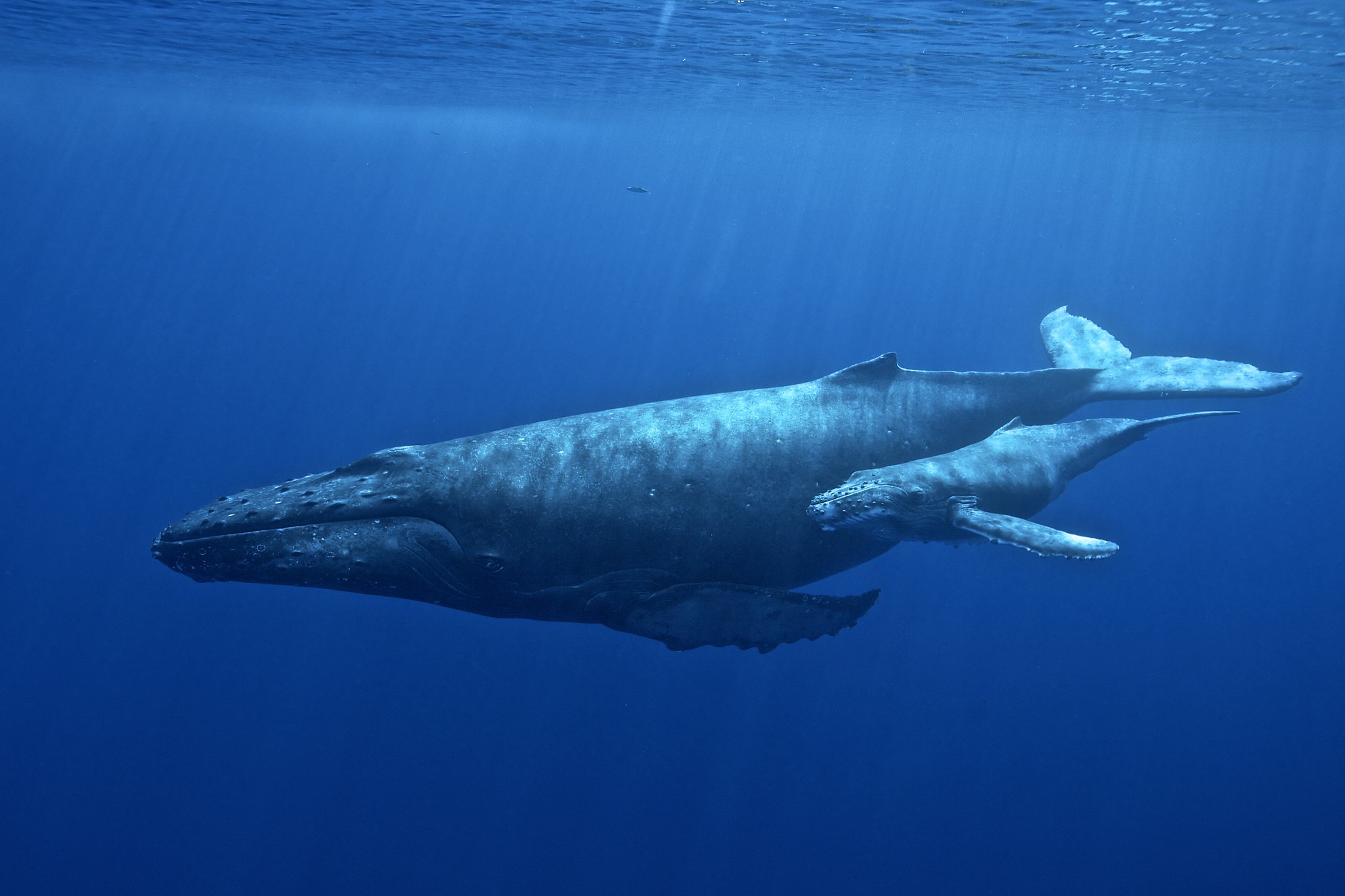
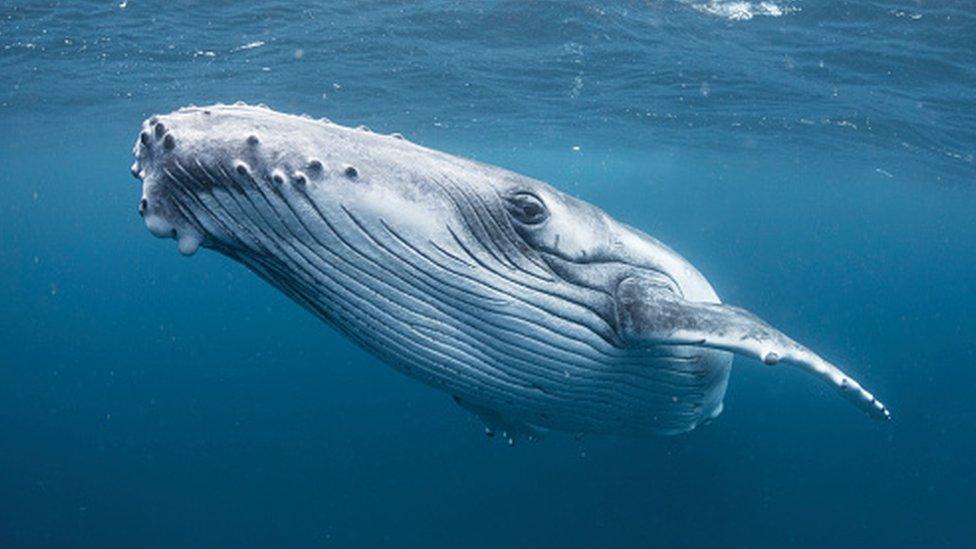
The average life span of a Humpback Whale is about 80-90 years. The oldest recorded age of a Humpback Whale is 95 years old. The threats to Humpback Whales have increased as commercial fishing increases (because of the dangerous fishing gear that a lot of sea animals get caught in). Almost all big whales were indangered at the point in time when whaling was the primary way to get oil. Most large species of whale where hunted (here is a list of all whales that where primarily hunted Right, Bowhead, Sperm, Humpback, Fin, Sei, Blue, and Grey whales) and almost entierly killed off until whaling was outlawed in 1986 and we found oil in the erath and whales became a protected species. But humans still stand a threat to them with commercial fishing, boats through there migration pathways and polotion of the water, even now whether that be through whaling or fishing nets.
The pigmentation, shape, and size of a humpback whale’s fluke are as crucial to identifying the animal as our fingerprints are to the FBI in determining our identity. Their classic black and white coloring combined with the serration of their fluke and other possible markings are the hallmark characteristics we, as naturalists and researchers of cetaceans, rely on to identify, track and record the behaviors of specific individuals within their family groups. Over the past 40 years, researchers have recorded sightings worldwide to make up a cohesive catalog of over tens of thousands of humpback whales.