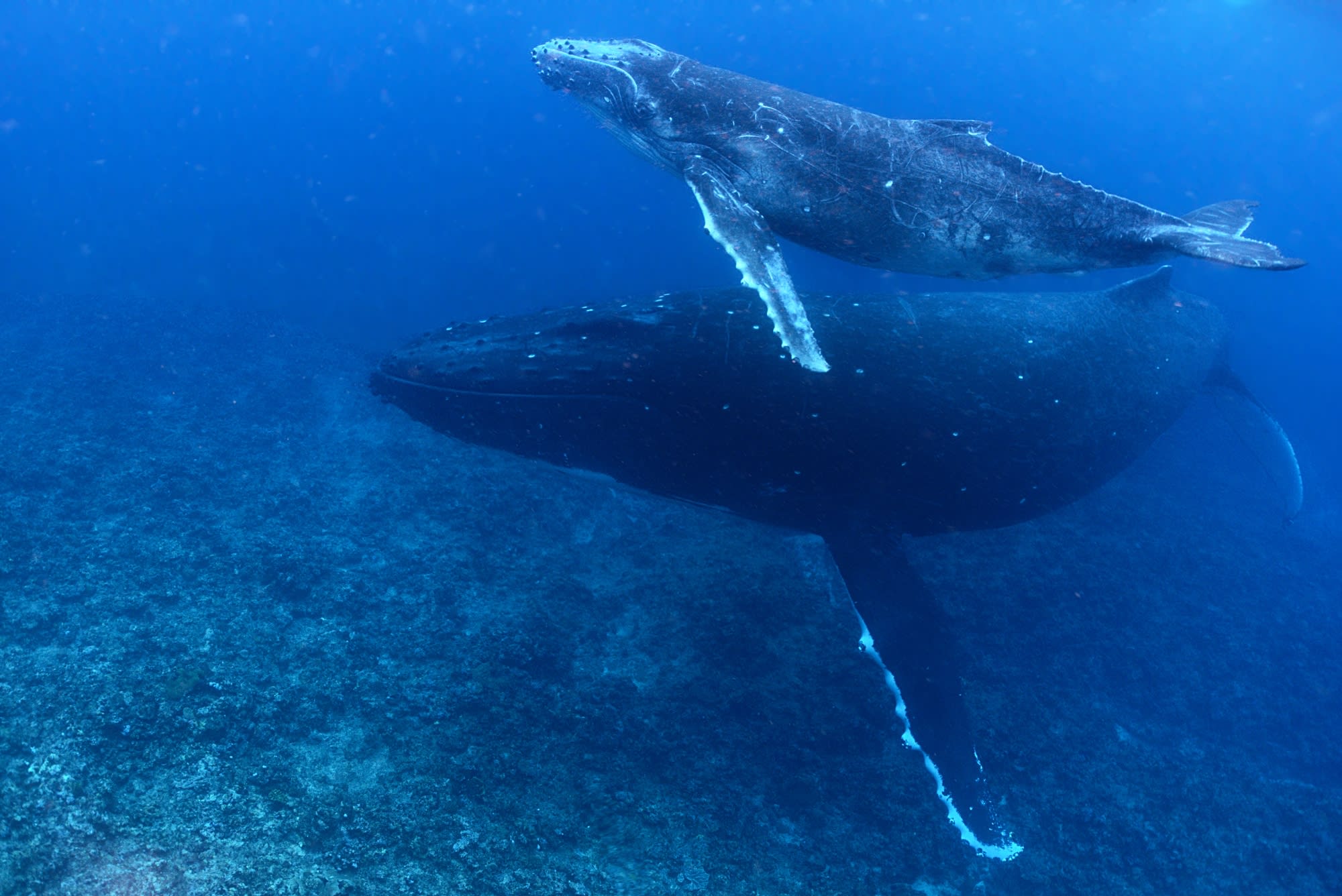
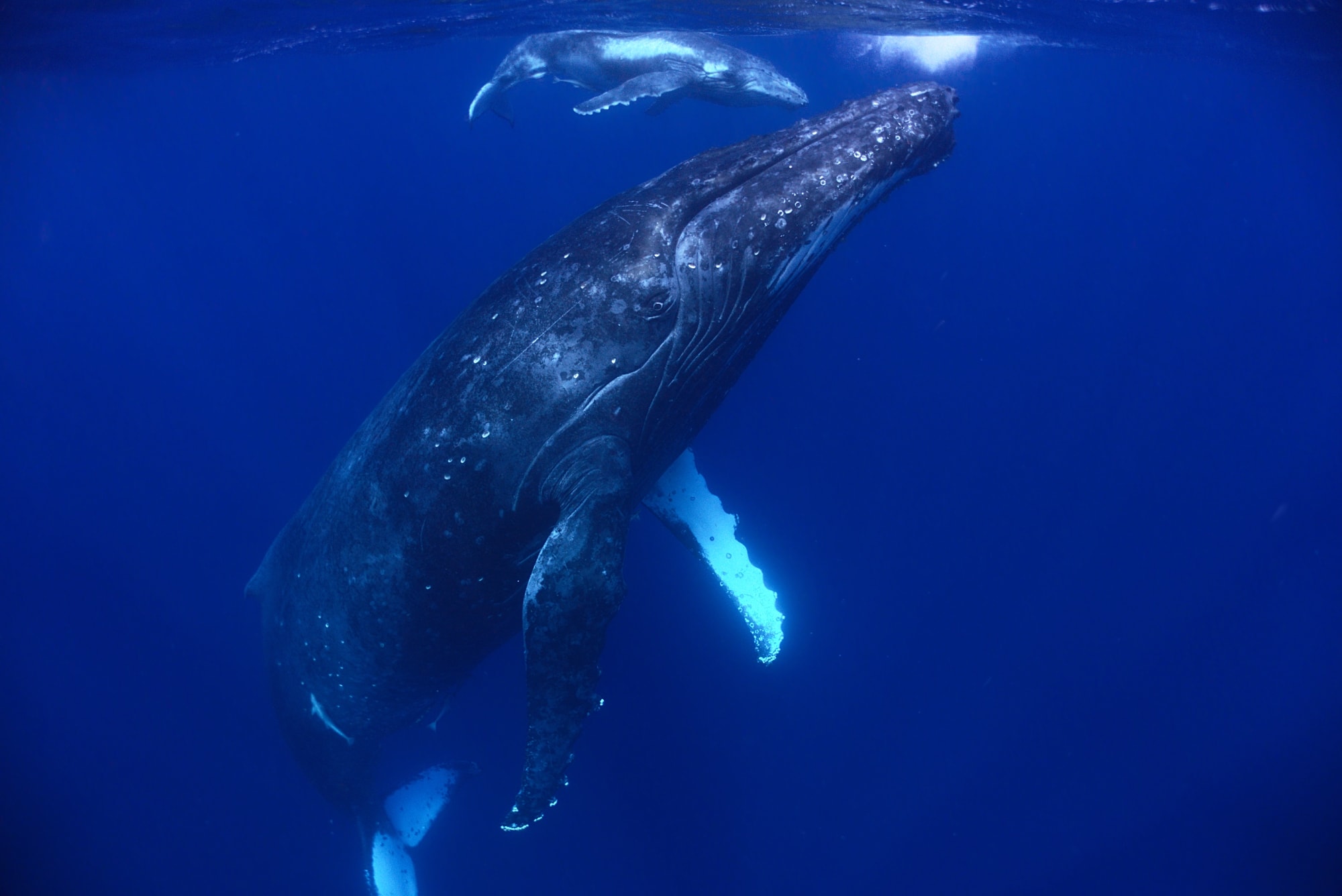
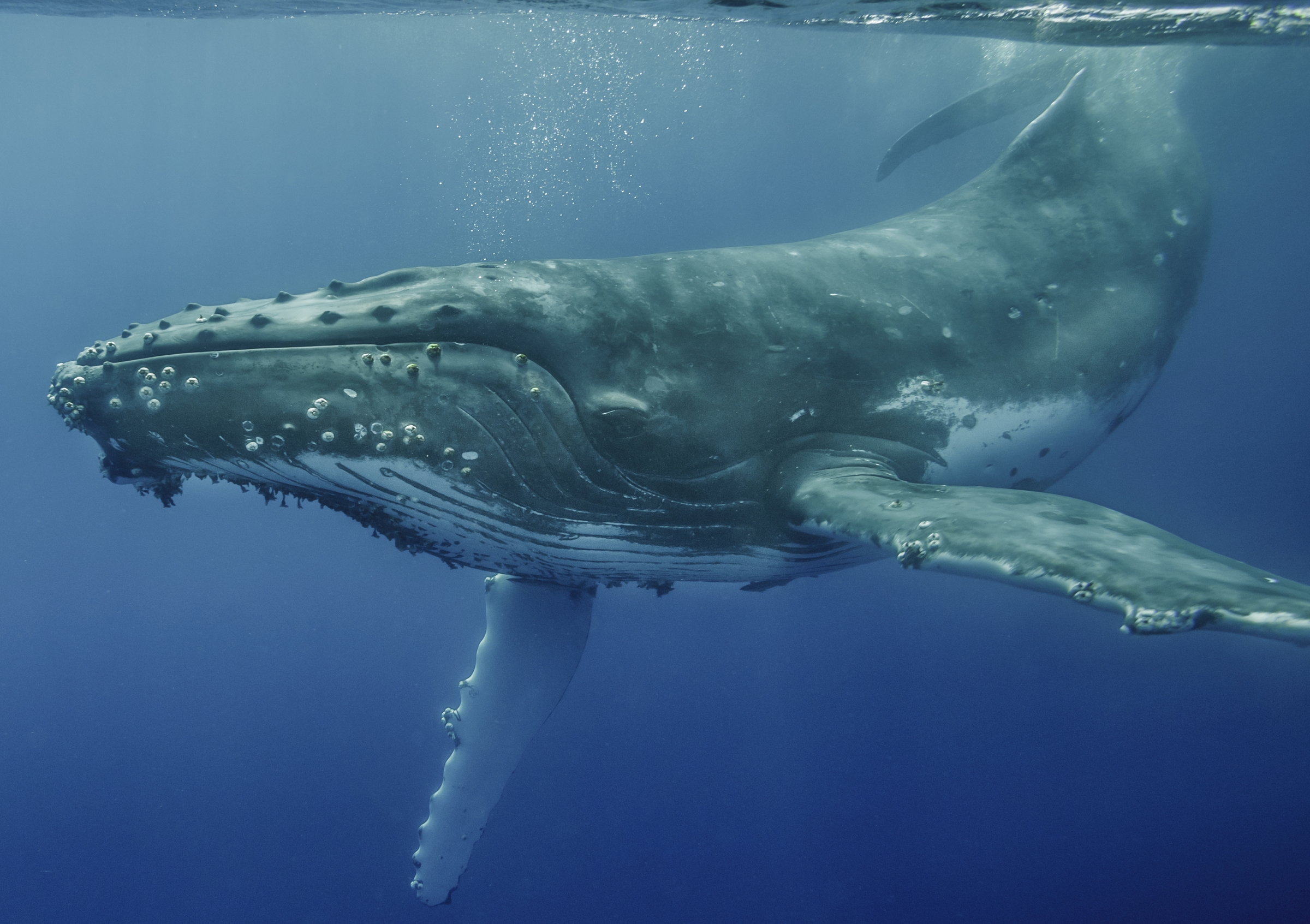
Humpback whales undertake some of the longest migrations of any mammal. They have to traval from there summer feeding grounds (Alaska/Antarctica) to their winter breeding grounds (Hawaiian Islands, Revillagigedo Islands, the Mariana Archipago, ect.) These journeys range from 3,000 to 5,000 miles (4828.032 to 8046.72 kilometers) but why do they travel from Alaskan or Antarctic waters to more tropical areas when they could just stay the Alaskan or Antarctic waters? Well it is because the females want to raise their calfs up, give birth, and mate in more tropical waters and the warmer water can help prepare calves for the long journey to Alaska or Antarcica.
Humpback whales live all over the world. Scientists believe there are 14 distinct populations worldwide, and within these populations are separate breeding stocks. The humpback whales that are seen in New Zealand are part of the Oceania population. They are probably part of the International Whaling Commission’s (IWC) Antarctic management zone known as Area V, and most likely belong to the group known as Breeding Stock E, whose boundaries extend from eastern Australia to Tonga.